Showing posts with label Colonial America. Show all posts

Saturday, December 5, 2009

Dead Admiral Quote of the Week

Out of His Way.

After hoisting the first Grand Union Flag above the USS Alfred, John Paul Jones established himself as one of the most famous American navy men of all time. His famous words "I have not yet begun to fight!" have endured to this day, even outside the realm of military history. He never rose higher than Captain in the United States Navy, but served as an Admiral in the Imperial Russian Fleet under Catherine the Great. His fighting spirit was summed up when he was first given command of a ship in 1776.

"I wish to have no connection with any ship that does not sail fast; for I intend to go in harm's way."


John Paul Jones monument, Washington, D.C.


Thursday, December 3, 2009

December 3, 1775

Hoist and Let Fly: Or Oh Say Does That Banner Yet Wave?

The Grand Union Flag, the first flag to be flown above an American Naval vessel.

In one of our earliest posts, the editors at Lies Agreed Upon let slip some of their favorite topics to cover (you may know a certain Corsican who gets a little press here). Besides their obvious man-crush on the Little Dictator, they've also been known to fawn over the trusty old United States Marine Corps. Their leatherneck-loving is so plain, however, that at times they often forget to give credit where credit is due. We've covered the Corps here several times, and not once have we mentioned its larger (and cleaner) cousin: the United States Navy.

In 1775, the Second Continental Congress decided the other colonies would back Massachusetts after tensions finally erupted at Lexington and Concord in April. After the battle of Bunker Hill, with the British garrison in Boston under siege, the merchant ship Black Prince made port in Philadelphia with news that the British were floating a pair of unarmed supply ships into the harbor. Congress, in attempt to secure those supplies for newly minted General Washington, immediately commandeered the merchantman.

Rechristened the USS Alfred, the ship was fitted out as a man-of-war and logged into the Continental Navy, established just two months before. On the windy morning of December 3, 1775, before she departed for Boston, a peculiar piece of cloth was hoisted above her decks and unfurled into the breeze. Onlookers that day may have been confused, as the flag looked a lot like that of the old British East India Company. But what they were seeing was the Grand Union Flag, one of the nation's earliest banners, and the very first flag of the United States Navy.

This tiny drop in the ocean of naval history gives us a chance to cover a topic most of us civilians never even think twice about. There are two things navy men know cold. They know their coffee, and they know their flags. Military ships often do not fly their country's traditional flag, but instead sail under special naval banners. Some of these flags, (ensigns or jacks, now that this blog has gone to sea) are commonly known, even if we don't always realize it. For fun today, instead of a typical post lets look at some ensigns you may or may not recognize.

United States:
For over 200 years after independence, through big wars and small, the U.S. Navy sailed into battle under this ensign, identical to the canton (or corner) of the national flag.

Following the attacks of 9/11, the Navy switched to this awesome flag, harkening back to one flown during the Revolution, after the Grand Union Flag. It seems the Navy is good for something other than giving Marines a lift.

While some may recognize this as the national flag of the Confederate States of America, this flag never stood for the Confederacy as a whole. It became synonymous with the South after its generals copied this design for their battle flags. It was originally the the Confederate Navy jack.

United Kingdom:
Sure, everyone knows the Union Jack, a form of which has flown over British possessions since the 15th Century. Yet British shipping, the lifeline of her empire, flies this flag...

...and the Royal Navy, whose ships ruled the waves for hundreds of years and intimidated the world, sails under this ensign.

Japan:
War movies will tell you that this flag was the symbol of the Japanese empire during World War II. Yet the Japanese national flag has not changed in almost 140 years. The Rising Sun flag was not the country's flag, but you guessed it, the naval jack. It is still in use today.

Spain:
The national flag of Spain is less than 30 years old. On the other hand, their ships, which for generations surpassed even those of the British, have sailed under a jack similar to this since the Spanish Armada. Armada Espanola, after all, translates into Spanish Navy in English.

We thought we'd mix it up a little today and try something new, and it gave us a chance to kill two birds with one stone. We gave the Navy some coverage for once, and we got to look at a little living history. Nations are represented around the world by their ships, and the flags they fly are often the first thing another ship would look for in international waters. As it happens, the naval rank of ensign was originally given to the officer charged with, not surprisingly, holding the flags. So we finally gave the navy some credit and we suppose they deserve it. After all, as any sailor worth his salt knows, all "Marines" really stands for is My Ass Rides In Navy Equipment, Sir!

Wednesday, November 18, 2009

November 18, 1803

Ici Nous Allons Encore: Or Here We Go Again.

It's almost shameful, really, but we've done it again. It seems we here at Lies Agreed Upon are such Bonipartists that we can't even go a day without covering a Napoleonic event. Some may say we're too enamored with the Little Dictator for our own good. We'll just say it's more of a thank you to our reader(s), all of whom are fluent in French and know where to find excellent brie. We're loyal to our fans here at Lies Agreed Upon, what can we say?

But of course, we cannot possibly cover the French two days in a row without highlighting two defeats in a row. So today we look at the fight for Fort Vertieres, a French stronghold on the island of Hispaniola, the last battle in the Haitian War for Independence. When the French surrendered to rebel forces on November 18, 1803, it paved the way for the establishment of what is now known as the Republic of Haiti. This may sound like a familiar tale to us Yanks; oppressed colony throws off European mother country in favor of a democracy, you say? Not exactly. Leave it to the French to put their own spin on this sort of Old-World nightmare.


Haitian rebels attack the fort's French garrison in this engraving of the Battle of Vertieres.

At the time, France's stake in Hispaniola was known as the colony of Saint-Domingue, and what a colony it was. Hot, humid and sticky; positively perfect for growing coffee and sugar cane, veritable necessities in pantries all over Europe. Earlier in 1803, Napoleon had signed away most of his holdings in the Western Hemisphere to a certain newly founded republic. (Ever been to New Orleans?) But while selling the huge, but mostly empty Louisiana Purchase unburdened France, if Saint-Domingue were to go, she would be robbed of one of the last jewels of her empire.

The funny thing about really lucrative colonies is that they usually churn out all those high profits at the exploitation of the labor force. By the second half of the 1700's, Saint-Domingue produced more coffee and raw sugar than all the British holdings in Caribbean combined. To guess who was doing all that farming, think about the southeast United States at about the same time. Society in the colony was based almost entirely around African slavery, and blacks outnumbered whites on the island almost nine to one. Oh, those tolerant and liberal French.

But let's think here. What else had just happened to affect France in the last ten years or so? For starters the king was killed, the government was overthrown more times than the guillotine was sharpened, and eventually there was an old-fashioned coup d'etat by none other than our boy Napoleon. We'll save the gushing for later because the important thing here is the French Revolution itself. All the talk about Liberty, Equality and Fraternity that kicked around during the absolution of the monarchy reached Saint-Domingue, and the slaves began to wonder just what it meant for them.

Free blacks in the colony began appealing to the French government for more equality. When they were denied and discriminated further, it played a role in the slaves decision to revolt in 1791. The revolt scared whites into coming to terms, and after helping fight off British and Spanish invasions the slaves were promised their freedom. Unfortunately for them, that was before Napoleon came to power, and old Nap had to have things his way. He dispatched an expeditionary force to Saint-Domingue in 1802, intent on eventually restoring slavery. So the former slaves, now exposed to European-style military tactics and a small taste of freedom, set out to win their independence.


Jean-Jacques Dessalines, leader of the rebels at Vertieres.


Once again, the battle is not particularly significant, as the determined attackers overwhelmed the outnumbered garrison of Fort Vertieres. The results however, were far reaching. The nation that became Haiti is important for several reasons. Haiti was the first independent Latin American country. Furthermore, it was the first state founded by black leaders since European colonialism began. And, surely noted by many in Virginia and Alabama, it was the first time a nation was founded after a successful slave rebellion.

We admit we got a little narrow in our topic selection again, but since the Haitian Revolution is sometimes lost as a side-note, we thought the irony of events in France shaping it worth sharing. In return for two days of Frenchies in a row, Lies Agreed Upon promises a couple hundred thousand pissed-off Russians and some Panzers for tomorrow. We appreciate the patience of our readers, and would like to thank the French for their participation.

Friday, July 3, 2009

July 3, 1754

Out of Necessity: Or the Military Redemption of Mr. George Washington.

With the weekend holiday approaching, today offers us a unique opportunity to examine the early career of an American icon: none other than George Washington. After making a name for himself as a surveyor on the frontier in the 1740's, it is not surprising that the Governor of Virginia appointed Washington to raise militia when trouble with the French surfaced in Ohio. His knowledge of the land and his relationship with the Native Americans of the region would prove invaluable in his first military trial.


Moving through the Allegheny Mountains in Western Pennsylvania, Washington heard of a small French force harassing British subjects in the area. When the French overwhelmed a British garrison at the Forks of Ohio, Washington assumed that their next target would be his small band made up of Virginians, Indians and a few British regulars. Two-weeks march from home, dependent on themselves for supply and expecting no help from other Colonies, Washington ordered his men to dig in and await the French attack he knew would come.

The French were on their way indeed, but not exactly for the purpose Washington suspected. Under orders not to engage the Virginians unless provoked, the French sent a small detachment on a diplomatic mission to order the colonists out of the area. Misreading their intentions, Washington's men ambushed the detachment, killing some French soldiers in the skirmish and murdering the envoy Joseph Coulon de Jumonville once the fighting was over. The effect on the rest of the French was obvious, and soon after, they returned on much less diplomatic terms.

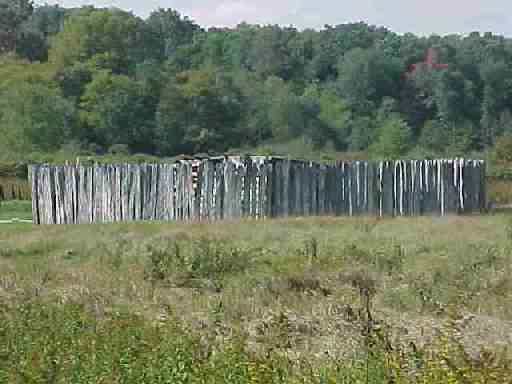
Fully expecting a response, Washington ordered his men to build a small fort, which they named Fort Necessity. Nearly out of supplies, the Virginians waited in their tiny circular fortifications. Setting out from their own encampment, Fort Duqesne (a settlement which eventually grew into the city of Pittsburgh), the French arrived on July 3, 1754. Initially, the Virginians and the British tried to fend off the advance in a skirmish line outside the fort. An attack from French-supporting Indians scattered the militia and forced the regulars back inside the walls. A heavy rainstorm compounded Washington's problems, and late that night for the first and only time in his career he surrendered his command.


It goes without saying that Washington's story does not end there. After abandoning the fort the next day and returning with his command to Virginia by mid-July, the colonists celebrated Washington as a hero for even attempting to stand up to the French. In Britain, however, the murder of the French envoy before the battle was seen as the spark that began the Seven Years War, or as it is known in North America, the French and Indian War. Most English statesmen were quite annoyed that a young Virginian ignited a conflict with the French that was eventually fought all over the world.

The actions during this ignominious beginning to his career would lead to the conflict that turned into one of the main causes of the American Revolution, his greatest triumph. In an interesting side note, July 3 would eventually become an important day in Washington's career. Not only did he surrender Fort Necessity on that date, but 21 years later to the day, on July 3, 1775, he was appointed commander of the Continental Army. While there were many dark days ahead for that command, their successes are obviously quite enduring. After all, what are we Yanks celebrating tomorrow?